Two Wheels, One View: A Pillion’s Ride to Portugal (Part 4)
Day 11: Porto
We took the FlixBus into Porto, a quick 45‑minute journey that dropped us at the city’s bus station. From there, we hopped on the metro and headed into the centre. Porto immediately impressed us with its striking architecture — grand old buildings in various stages of renovation, some reduced to nothing but their beautiful facades.
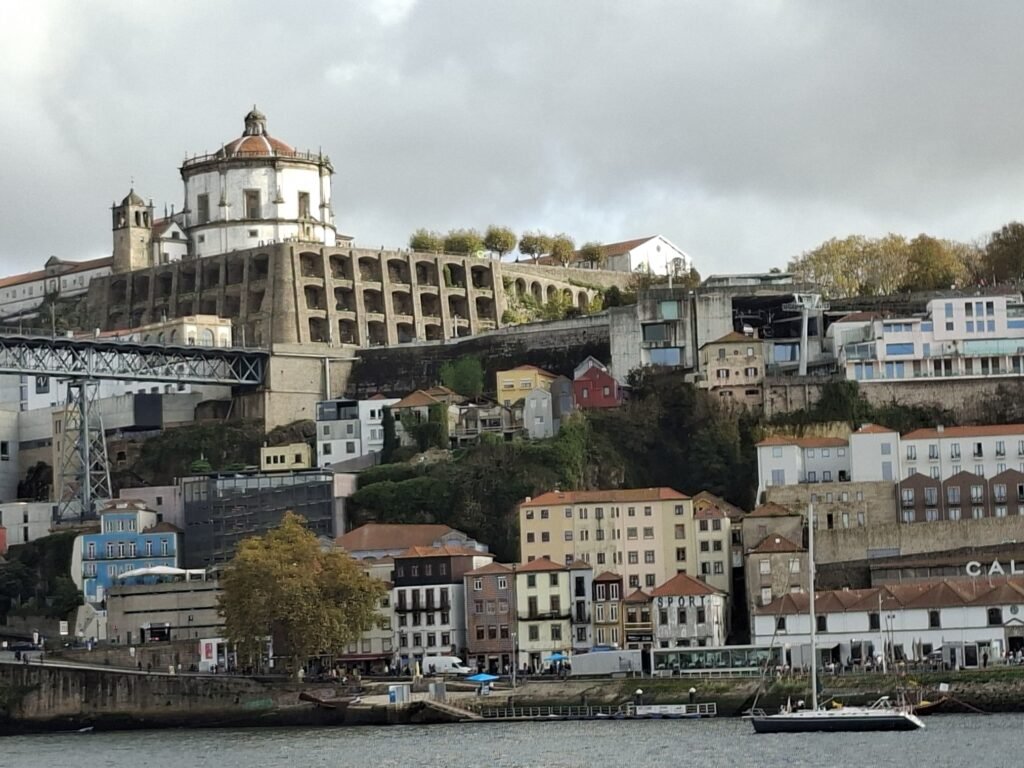
After stopping for food and a drink, we made our way down towards the river. The walk is quite hilly, with steep streets and walkways lined with the usual tourist shops. Along the way, we discovered an indoor market housed in an old building perched on a hill, reached by many steps. A small green space sat in front of it, with a cathedral to the right.
The Douro River, wide and full of life, cuts through the city, offering countless opportunities for river cruises. Bridges of all kinds span the water — for cars, pedestrians, trains, and trams — and both sides of the river are lined with lovely buildings and plenty of places to eat and drink. Sadly, I must report that Porto cafés do not make a good latte. I tried two and abandoned both.
Eventually, it was time to head back to the bus station for our return to Braga. We opted for a taxi, as walking back would have taken too long. However, as soon as the driver crossed the river, I thought, This doesn’t feel right. Still, we assumed he knew a quicker route.
He didn’t. He dropped us at a train station instead.
Inside, we asked whether we could get to Braga from there and how much it would cost. We’d previously checked train prices online and they seemed expensive, so we were a bit anxious. Thankfully, we could get to Braga — but we needed to change trains at the main station and catch our connection from platform 1.
At the main station, we were told we’d arrive on platform 5 or 6 and would need to go down the steps and through the underpass to reach platform 1. As we approached the steps, a sign flashed BRAGA — we had just missed the connection.
The next train was in about 30 minutes, so we headed to platform 3 to wait. While chatting, a woman who had overheard us asked to see our tickets. We think she worked for the railway. She explained that our tickets were only valid on the district line — which departed from platform 1 — and that a train would be arriving shortly.
So, back down the steps we went, through the underpass again, and onto platform 1. Thankfully, the train arrived within minutes. Unfortunately, it was packed to the gunnels with commuters, and we had to stand for about 45 minutes before finally getting a seat. I was surprised by how many electric scooters were getting on and off along the route.
We arrived in Braga, grabbed a few bits from the shop, and took a taxi home.
Day 12: Ride to Toro
This morning we learned that the bad weather we’d been expecting along the Portuguese coast had officially become a named storm — Claudia. With Portugal forecast to receive a month’s worth of rain in under a week, we realised that visiting Cascais and Évora would be pointless. So we decided to change plans and head back into Spain, where the weather looked slightly better.
Our new destination was Toledo — not too far south for our eventual return to Santander, and not too far north for our travelling companions to continue their journey. The ride would take nearly seven hours, so we chose to break it into two parts and stay overnight in Toro.
We left Braga around 11 a.m., just as the high winds were easing but the rain was beginning. Wearing full wet‑weather gear, we set off towards the A4, a toll road that forms part of the European E‑82 into Spain. Under normal circumstances it would have been a beautiful ride, but the torrential rain made it challenging. The higher we climbed into the hills, the heavier the rain became. Some hills were visible through the downpour, but many were swallowed by low clouds. In the valleys, we could just make out towns and villages; higher up, all we could see was spray, mist, and the blurred shapes of vehicles ahead.
We passed through the Marão Tunnel — 5,667 metres long — and it was a relief to be out of the rain for a moment. But as we emerged, a wall of rain greeted us, seemingly worse than before (though that may have been psychological).
A sad moment occurred along this stretch. Traffic ahead suddenly braked, and as the car in front of us pulled into the emergency lane, we saw a dog lying dead in the road. Its companion, trying to reach it, was struck by another car and lay crying in pain. With traffic building behind us and nowhere safe to stop, we had no choice but to continue. It was awful.
As we neared the Spanish border, the rain finally eased and then stopped. Even so, we were soaked and uncomfortable. My visor kept steaming up, so I had to ride with it slightly open, and the rain seeped into my neckerchief. Despite the improving weather, the E‑82 felt endless, with constant speed changes due to junctions and exits. Eventually we left the main road and passed through several built‑up areas that felt like ghost towns.
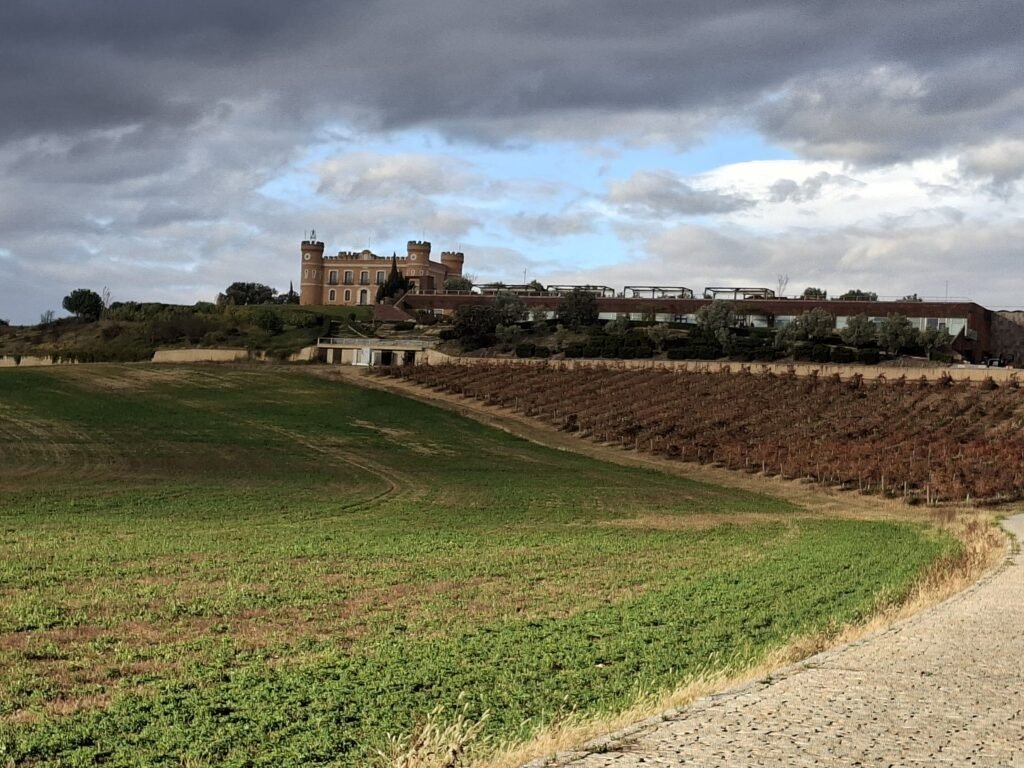
By this point, we’d both had enough. The rider had neck tension and leg cramp; I had backache and a numb left buttock. But then, finally, we saw it — our accommodation for the night, perched on a hill and looking very much like a castle. It was a glorious sight.
We parked up, grabbed the panniers, and checked in. All we wanted was to get out of our wet gear and into a hot shower. The rain had soaked us more than we realised, creeping in around our necks where the waterproofs didn’t quite seal. Our inner jumpers were wet, and our waterproof trousers had let water pool under us, soaking our bums. My gloves felt three times heavier than when I’d put them on, and when I removed them, the dye had stained my hands black.
We hung everything on the radiators to dry. The room was roasting, but we needed dry clothes for the morning, so we opened the windows and let the heat do its work.
The accommodation was beautiful — a spacious room with a bed, wardrobe, sitting area, and a bathroom inside the turret of the castle. The views stretched across vineyards and a lake. It looked like a lovely area for walking, but we didn’t have enough time to explore.