
Chasing The Compass Points of Spain
Some ideas arrive politely. Others kick the door in, make themselves a coffee, and start rearranging your weekend plans.
This one came from BBC Radio 2, where someone mentioned travelling to the four compass points of Britain. Lovely idea. Very doable. Very… compact.
But then my brain whispered:
“What about Spain?”
Spain, of course, is not compact. Spain is sprawling, dramatic, occasionally inconvenient, and always worth the effort. You don’t just nip to the edges of Spain. You commit.
So instead of one heroic road trip, we’re turning it into a series of mini‑adventures—four journeys to the four corners of the map, plus one to the very centre. Five points, five stories, and plenty of snacks.
The Five Points of the Spanish Map
Spain’s extremes — and its centre — each have their own personality.
|
Direction |
Location |
Province |
Why It’s Worth the Trip |
|
North |
Estaca de Bares |
A Coruña |
Cliffs, lighthouses, Celtic vibes, and the Atlantic doing its dramatic Atlantic thing. |
|
South |
Punta de Tarifa |
Cádiz |
The meeting point of two seas, two continents, and about 10,000 kite surfers. |
|
East |
Cap de Creus |
Girona |
Dalí country: surreal rocks, wild coves, and the earliest sunrise in Spain. |
|
West |
Cabo Touriñán |
A Coruña |
Remote, windswept, and perfect if you enjoy feeling like the last human on Earth. |
|
Centre |
Cerro de los Ángeles |
Madrid |
A hill just south of Madrid, marked by a monument and a quiet, contemplative atmosphere — the literal heart of the country. |
Why We’re Doing It in Stages
Could we do all five in one go?
Technically yes.
Emotionally, spiritually, and logistically… absolutely not.
Spain is big. Life is busy. And rushing would turn this into a box‑ticking exercise instead of the slow, delicious adventure it should be.
Breaking it into separate trips means:
- We can choose the right season for each point
- We can explore the surrounding region properly
- We can eat more food (this is important)
- We can turn one idea into a year of adventures
This is the kind of travel that feels like a series of gifts to your future self.
Choosing Our First Compass Point
We haven’t decided which direction to tackle first, but here’s the vide check:
South – Tarifa
For wind-blown hair, Moroccan silhouettes on the horizon, and the feely that the world is very big and very close.
East – Cap de Creus
For seafood lunches, lunar landscapes, and the smug satisfaction of being the first person in Spain to see the sunrise.
North – Estaca de Bares
For misty cliffs, Celtic echoes, and the kind of weather that makes you feel alive (and occasionally damp).
West – Cabo Touriñán
For solitude, crashing waves, and the joy of discovering a place that most people think is Fisterra…. but isn’t.
Centre – Cerro de los Ángeles
For a contemplative pause between the extremes – a symbolic midpoint, perfect for a reflective day trip or a reset between bigger adventures.
The Centre – Cerro de los Ángeles
If the compass points are the dramatic edges of Spain, the Cerro de los Ángeles is the quiet heartbeat in the middle – the place where the map folds in on itself and says, “Right, this is the centre. Everything else radiates from here.”
Located just south of Madrid, it’s not wild or windswept or ocean-lashed. There are no cliffs, no crashing waves, no kite surfers doing improbable things withe wind. Instead, you get something different: a calm hilltop, a monumental sculpture and a sense of standing at the literal midpoint of the country.
I don’t think it’s possible to visit the 4 compass points of Spain without visiting the centre. It doesn’t have to be first on the list, but it has to be on the list.
Why The Centre Matters
- It’s symbolic – the geographical centre of mainland Spain
- It’s peaceful — perfect for a reflective wander
- It’s accessible — an easy day trip if you’re passing through Madrid
- It balances the whole project — the anchor between the extremes
What to Expect
The only thing we expect from Cerro de los Ángeles is that it will be entirely different from the four traditional compass points, offering a unique perspective of its own.
How can we make it more than just a compass trip
- Combine it with a trip to toledo
- take in the delights of Madrid and its food (cocido madrileño or Bocadillo de calamares)
- Visit the historic centre of Getafe
Planning the Trips(Don’t Overthink It)
Here’s the prictical bit
When to Go
- North and West (Galicia) Late spring to early autumn as the weather can be a bit hit and miss in the colder months.
- South (Tarifa) Spring or autumn if you want to avoid the wind.
- East (Cap de Creus) Any time except the peak summer period (too many people)
- Centre (Cerro de los Ángeles) Year‑round, though spring and autumn are ideal.
How Long Do We Need?
- Centre: A long weekend would work well. We could visit Toledo, Getafe and Madrid.
- South: Maybe another long weekend. After visiting Tarifa, we could stop of at Fuengirola on the way back.
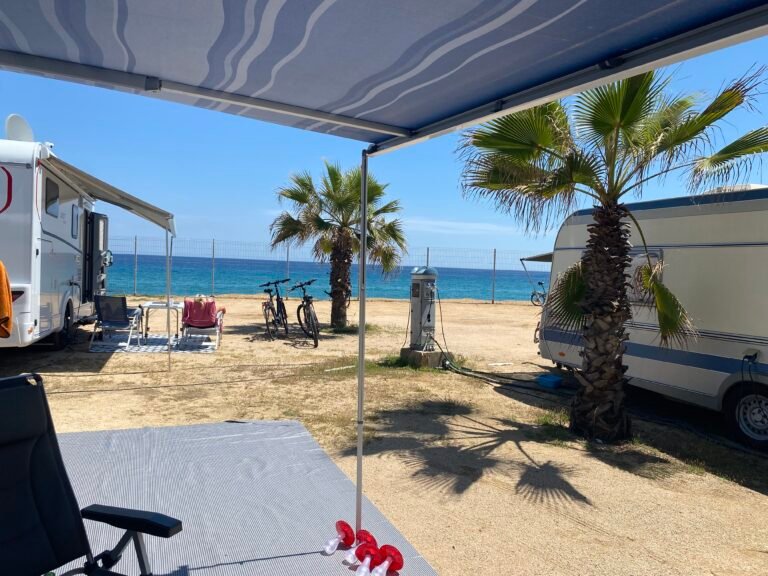
- East: Our first thoughts are to combine this with a trip to France. It’s 9 hours plus from home, some we may make it part of a 2 week Motor Home Journey.
- North and West: These are also a very long way form home, so we are considering a week, with a run back through Portugal.
The Beginning of a Five-Part Adventure
This post is a prologue. The spark. The promise. Another dream
Over the coming months, we’ll head to the North, South, East, West and the centre of Spain – collecting stories, photos and memories and the kind of tiny, unexpected moments that make travel so wonderfull.
Spain is huge. The edges (and the centre) are calling. And the heart is waiting too.